How does it work?
Flavour amplification, rooted in science.
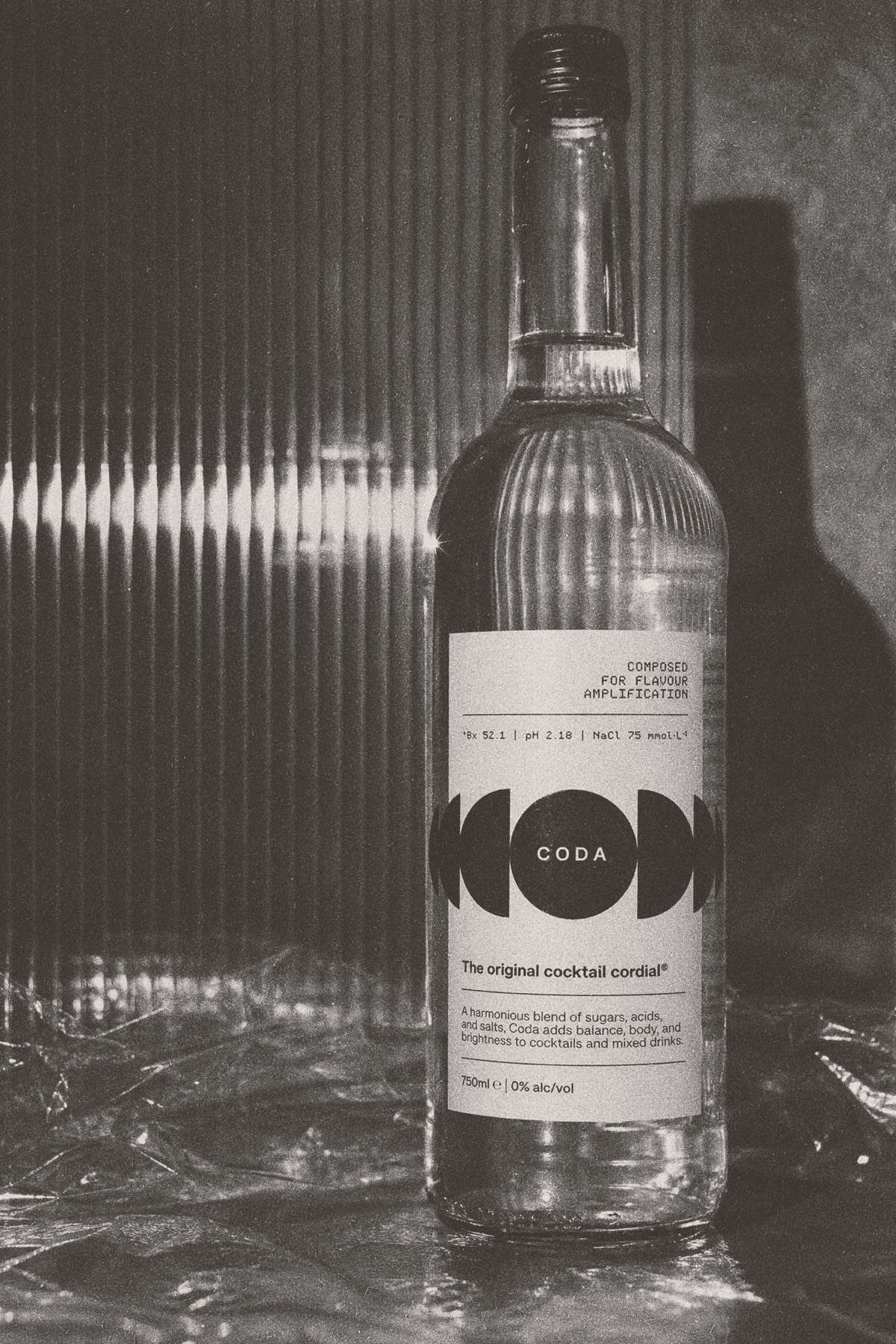
Lemon juice is sour and nothing else. Coda is sour, sweet and a little salty, in the amounts a good drink wants.
The principle
Flavour rides on taste. Get the taste in balance and the flavour turns up.
01
Taste
The core elements we physically perceive on the tongue — sweet, sour, salty, bitter, and umami.
02
Flavour
The character of what we consume — strawberry, chocolate, basil, coffee. Driven at a molecular level by aroma.
03
Harmony
Aroma alone isn’t enough. Flavour molecules need taste to register on the palate — and only when every taste element is perfectly balanced does flavour truly come alive.
Three roles
Sugar carries. Salt amplifies. Acid balances.
The carrier
Sugar
The primary carrier of flavour. Sugars add body, texture, and length, allowing flavours to fully unfold on the palate.
The amplifier
Salt
Heightens flavour intensity, enhances definition, and lifts aroma, allowing individual notes to express themselves clearly.
The balancer
Acid
The great balancers. Acids counteract sweetness, sharpen structure, and introduce layers of textural intrigue across the tongue.
What’s in it?
A recipe decades in the making.
Each ingredient serves a defined role in flavour amplification, precisely measured and balanced to create something greater than the sum of its parts.
Sugars
Sucrose
The primary flavour carrier. Weight, mouthfeel, and roundness — binds aromas and extends flavour length on the palate.
Fructose
Immediate sweetness at the front of the palate, balancing high acidity with a bright, fresh character.
Acids
Citric acid
Bright, sharp acidity — the primary driver of perceived “spark” in mixed drinks.
Malic acid
Softer, green-apple acidity that lengthens the palate and adds structure.
Tartaric acid
Dry, wine-like grip and precision — sharpens the finish, improves compatibility with spirits.
Ascorbic acid
An antioxidant — subtly enhances brightness and preserves fresh notes over time.
Salts
Sodium chloride
The flavour amplifier. Suppresses bitterness, enhances sweetness, increases intensity and clarity.
Sodium citrate
Buffers acidity — smooths sharp edges, increases savoury depth, improves balance.
Potassium citrate
Refines acid structure for a rounder, more integrated mouthfeel.
Not all acids are equal
The work is already done.
| Criteria | Fresh pressed | Bought-in juice | Acid blends | Coda |
|---|---|---|---|---|
| No prep | — | ● | ● | ● |
| Consistent price | — | — | ● | ● |
| Consistent taste | — | — | ● | ● |
| Balanced | — | — | — | ● |
| Easy to use | — | — | — | ● |
| Zero waste | — | — | ● | ● |
| Speed of service | — | — | — | ● |
| Endless applications | — | — | — | ● |